What Is OpenAI? A Simple Guide to the Company Behind ChatGPT
A friendly, jargon-free guide to OpenAI, the company behind ChatGPT. Learn what it makes, how ChatGPT turns your words into answers, how a small nonprofit lab became one of the most valuable companies in the world and what people argue about.

On this page
If you have heard of ChatGPT, you have heard of OpenAI's work. OpenAI is the American company that makes ChatGPT, the chat app that kicked off today's AI boom when it appeared at the end of 2022. By early 2026, about 900 million people were using ChatGPT every week.
But OpenAI is more than one app. It is a research lab, a business that sells AI to other companies, and an organization with an unusual structure and a dramatic history. This article explains, in plain language, what OpenAI is, what it makes, how its technology works and why it is talked about so much.
What is OpenAI?
OpenAI is an artificial intelligence company based in San Francisco. It was founded in December 2015 as a nonprofit research lab, with a stated mission to make sure that artificial general intelligence (AGI) "benefits all of humanity." AGI is the idea of an AI system that can do most of the work people do, as well as or better than they can. Nobody agrees on exactly when, or if, that will happen, but it is the goal OpenAI was built around.
Its founders included Sam Altman, Elon Musk, Greg Brockman, Ilya Sutskever and several other researchers. Sam Altman is its chief executive (CEO) today. Elon Musk left the board in 2018 and later became one of the company's loudest critics.
The name came from an early promise to share research openly. As you will see, how "open" OpenAI really is has become one of the big arguments about it.
What does OpenAI make?
Almost everything OpenAI sells is powered by one family of AI models, the GPT models. Think of them as the "brain." Different products put that brain to work in different ways.
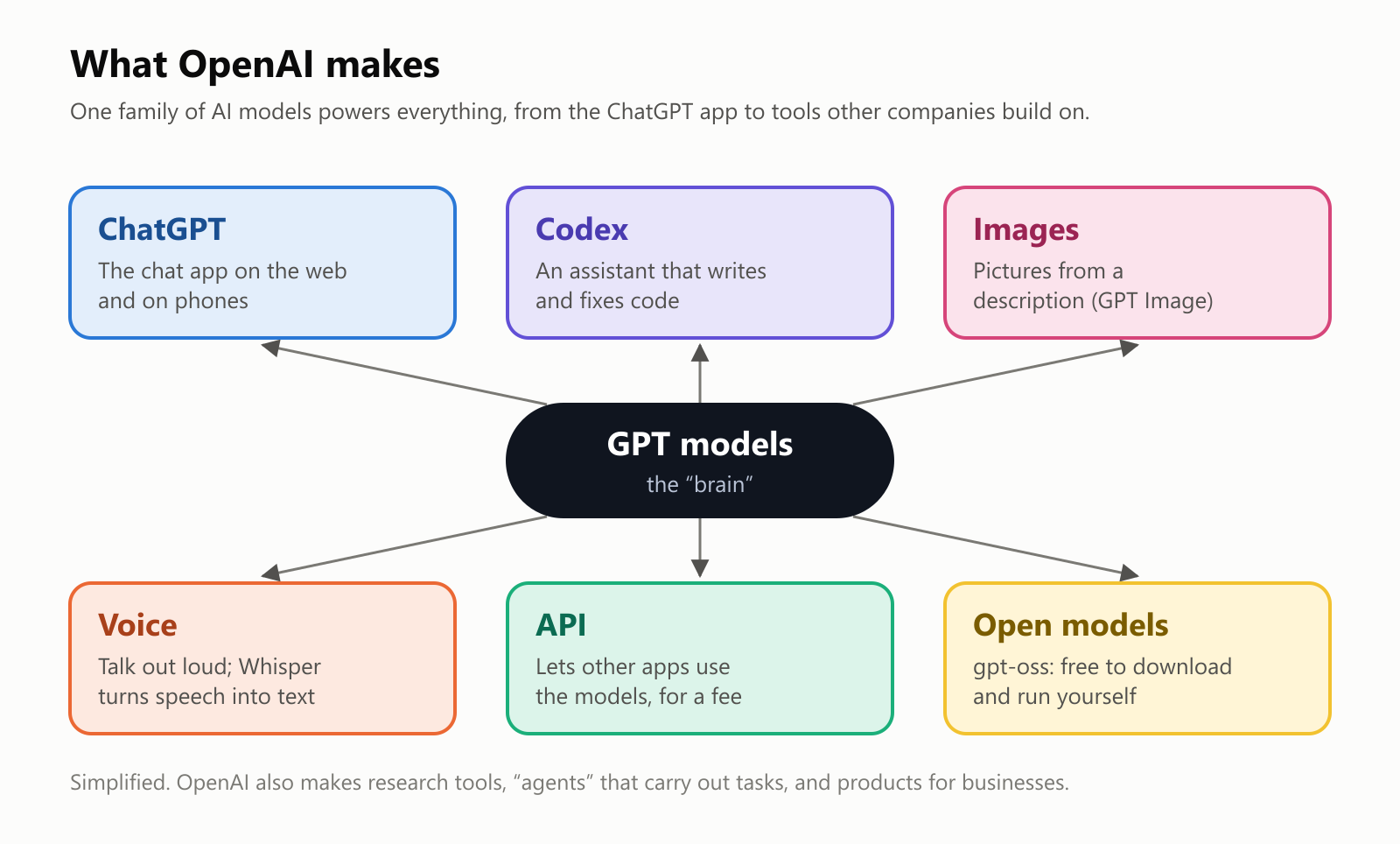
- ChatGPT is the app most people know. You type (or say) something, and it answers in plain language. It can explain, summarize, translate, brainstorm, help with homework, write emails and much more. There is a free version, and paid plans such as Plus ($20 a month) and Pro ($200 a month) add more powerful models and higher limits.
- Codex helps programmers by writing, explaining and fixing code.
- Image generation (first called DALL·E, now GPT Image) draws pictures from a written description.
- Voice features let you talk to ChatGPT out loud. OpenAI's Whisper model, which turns speech into text, is free for anyone to use.
- The API (application programming interface) lets other businesses plug OpenAI's models into their own apps and pay for what they use. Many customer service bots, writing tools and coding assistants you meet elsewhere run on OpenAI underneath.
- Open models, called gpt-oss, came out in 2025. Anyone can download them and run them on their own computer.
How ChatGPT reads your words
When you send ChatGPT a message, the model doesn't see letters or words the way you do. First, a program called a tokenizer chops your text into small pieces called tokens and turns each one into a number. Short, common words are usually a single token. Longer or rarer words are split into parts.
We ran OpenAI's own open-source tokenizer, tiktoken, on a sentence to see exactly what happens:
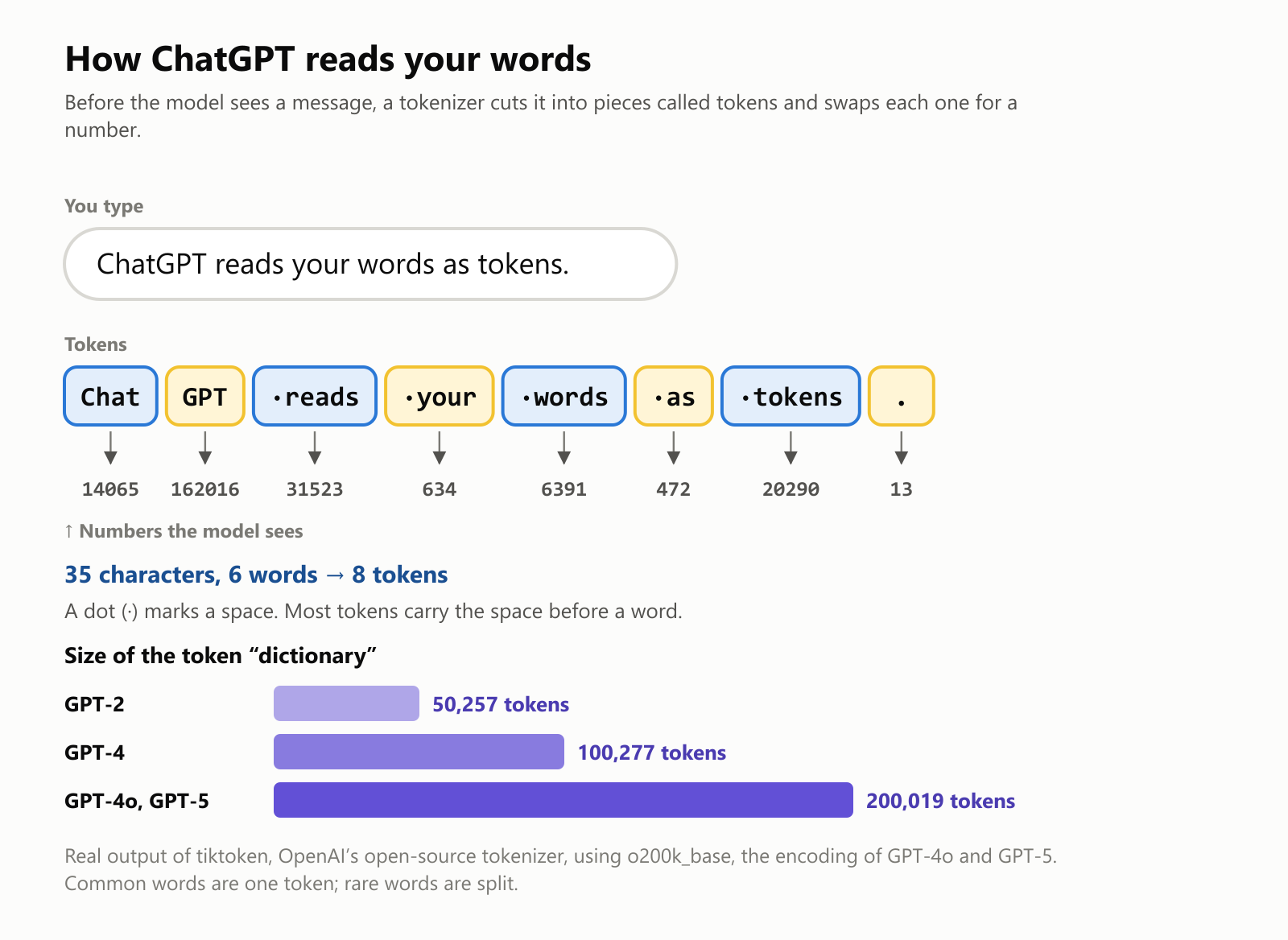
The sentence has 6 words but 8 tokens, because "ChatGPT" becomes two pieces, "Chat" and "GPT," and the period gets its own token. Notice that most tokens include the space in front of the word. The model's "dictionary" of tokens has grown over the years, from about 50,000 pieces for GPT-2 to about 200,000 for the models behind today's ChatGPT. A bigger dictionary means common words in more languages fit into a single token.
Tokens matter to you in practice: AI companies measure how much text a model can read at once, and how much to charge, in tokens.
The big idea: guessing the next word
At their core, GPT models do one surprisingly simple thing: given some text, they predict what comes next. Then they add that piece to the text and predict again, one token at a time, until the answer is finished.
To show this for real, we ran GPT-2, a model OpenAI released in 2019 and later published for anyone to download, on our own computer. We gave it the start of a sentence and asked for its chances for every possible next token:
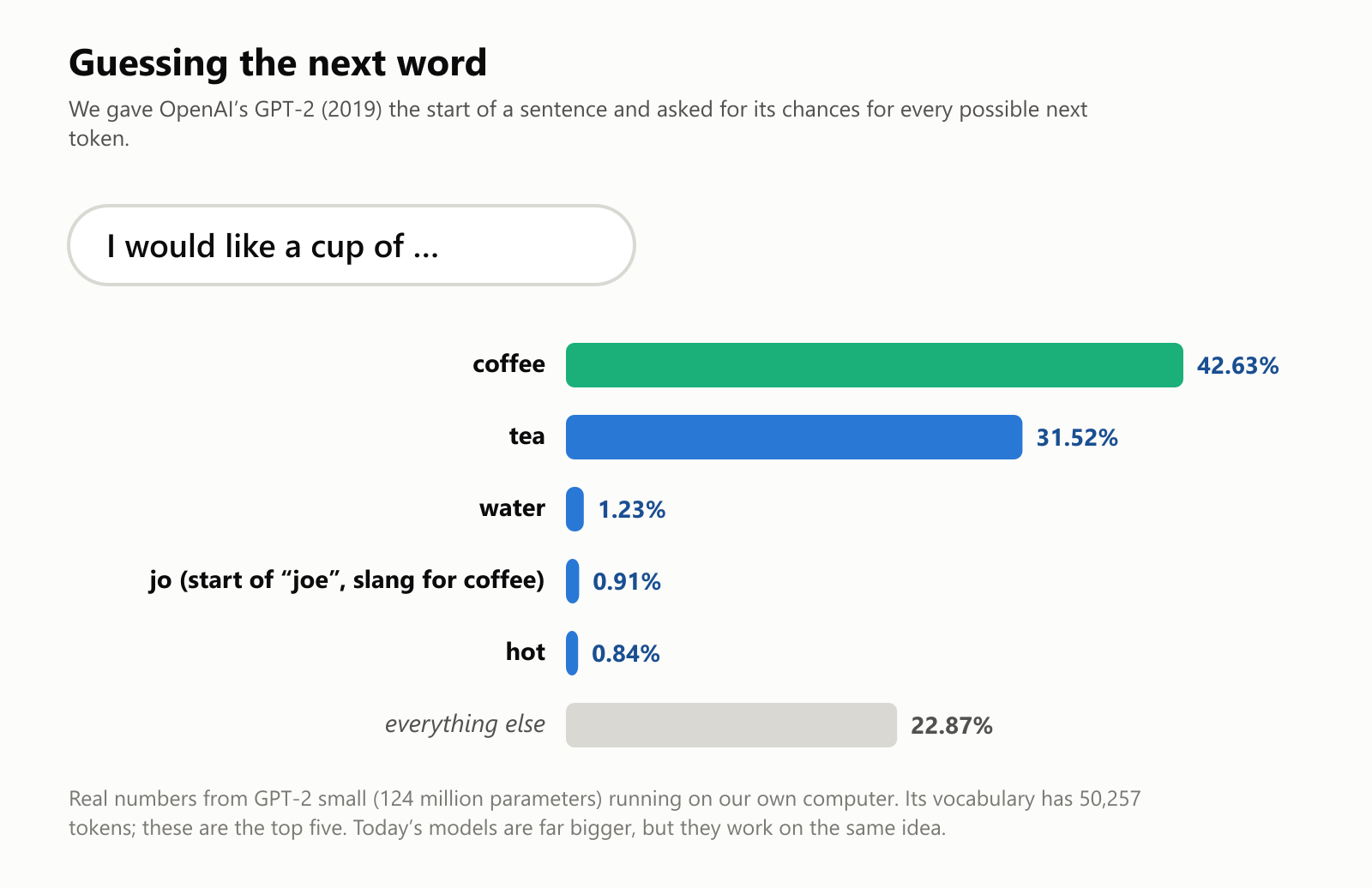
The model thinks "coffee" is most likely, with "tea" a close second. It never looked anything up; it learned these patterns by reading a huge amount of text in which people ask for cups of coffee and tea. Notice "jo," which is the start of "joe," American slang for coffee. That is a token at work: the model predicts pieces of words, not always whole words.
GPT-2 is small by today's standards, with about 124 million adjustable numbers inside it (called parameters) in the version we ran. The models behind ChatGPT today are vastly bigger and better trained, but they still work on the same basic idea.
From GPT to ChatGPT
A model that only predicts the next word is not yet a helpful assistant. When we asked GPT-2 to continue "The capital of France is," it kept writing, but it never gave the answer:
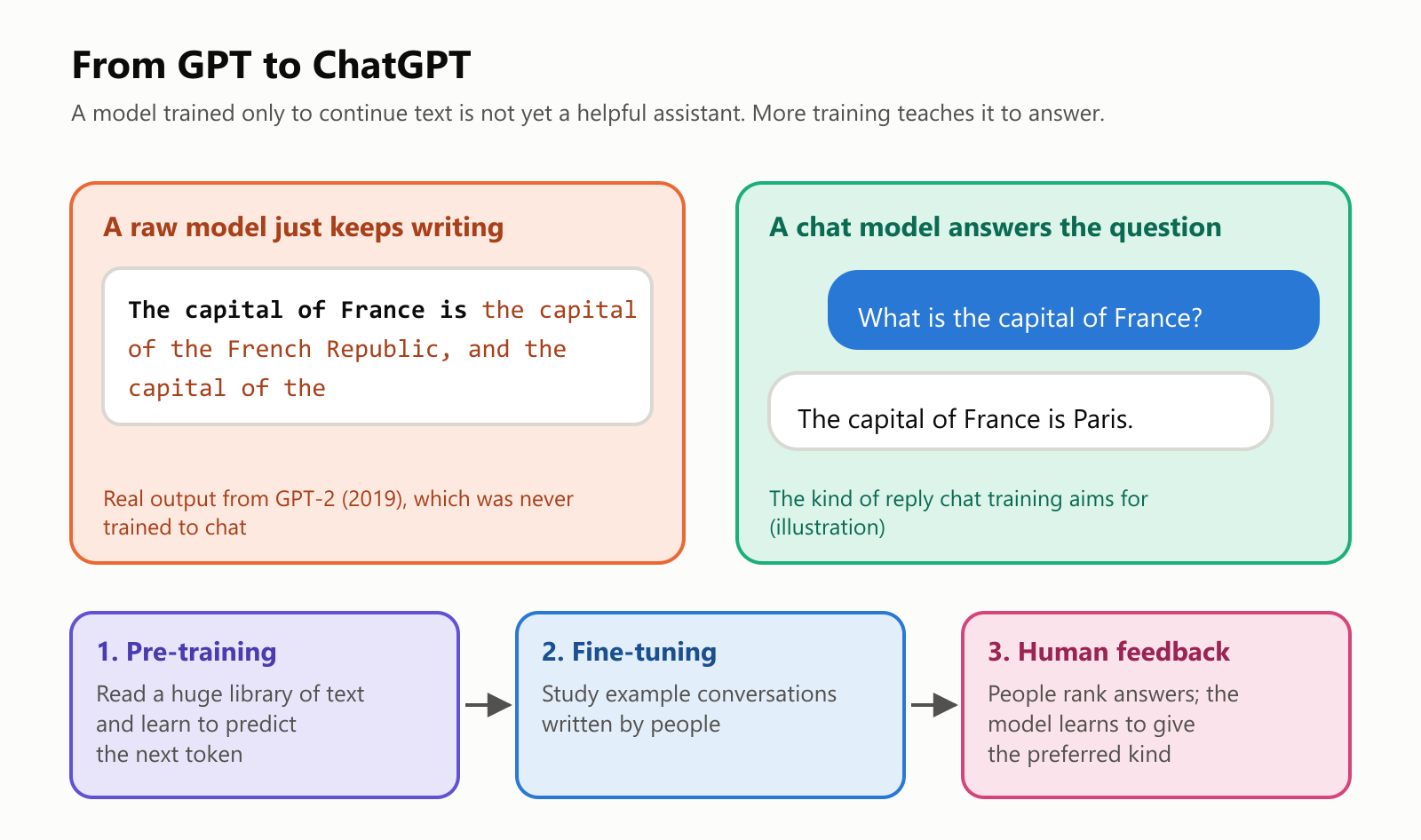
To turn a text predictor into ChatGPT, OpenAI trains it in stages:
- Pre-training. The model reads an enormous library of text from books, websites and other sources, and learns to predict the next token. This is where its general knowledge comes from. (See What Is Pre-training?)
- Fine-tuning. The model studies example conversations written by people, so it learns the shape of a good answer.
- Learning from human feedback. People compare several answers and rank them. The model is then trained to give the kind of answers people prefer. This technique is called reinforcement learning from human feedback, or RLHF. (See What Is Reinforcement Learning?)
That recipe was described by OpenAI in early 2022, and it is the key reason ChatGPT felt so different from the AI people had tried before.
The GPT family grows
GPT stands for Generative Pre-trained Transformer: it generates text, it is pre-trained on lots of text, and it is built on a design called the transformer. Each new GPT has been bigger and more capable than the last.
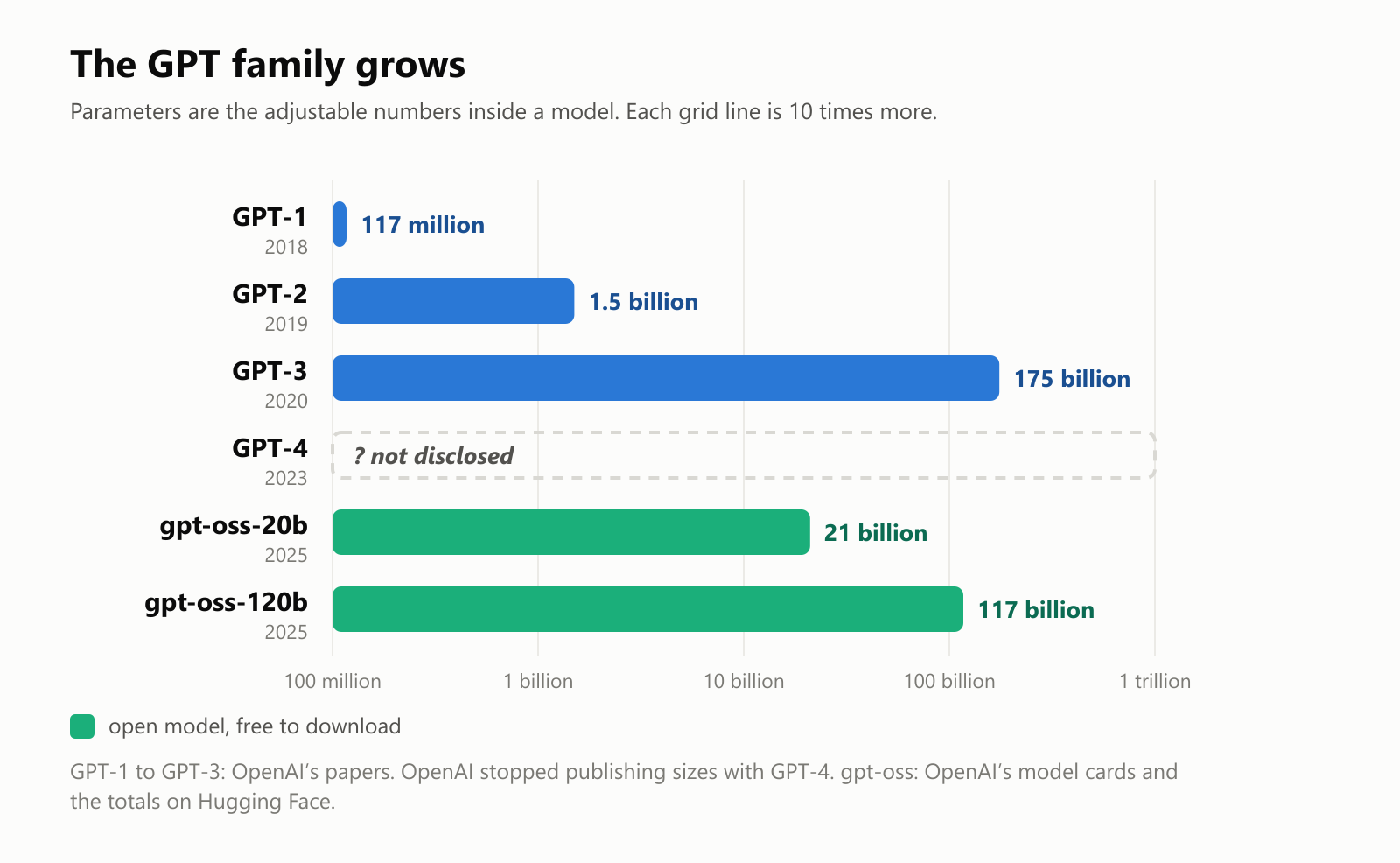
From GPT-1 to GPT-3, the size grew about 1,500 times in only two years. Starting with GPT-4, OpenAI stopped saying how big its main models are, which is one reason critics say the company is no longer very "open." In 2025 it released two open models, gpt-oss-20b and gpt-oss-120b, its first downloadable language models since GPT-2.
Since 2024, OpenAI has also built reasoning models, starting with o1. Instead of answering right away, they work through a problem step by step before replying, which helps with math, science and code. Today's ChatGPT combines both ideas: it can answer quickly, or "think" longer when a question is hard. In 2026 the main model family reached GPT-5.5 in April and GPT-5.6 over the summer.
The fastest-growing app ever
ChatGPT opened to the public on November 30, 2022, as what OpenAI called a "research preview." It was free, and it went viral almost overnight.
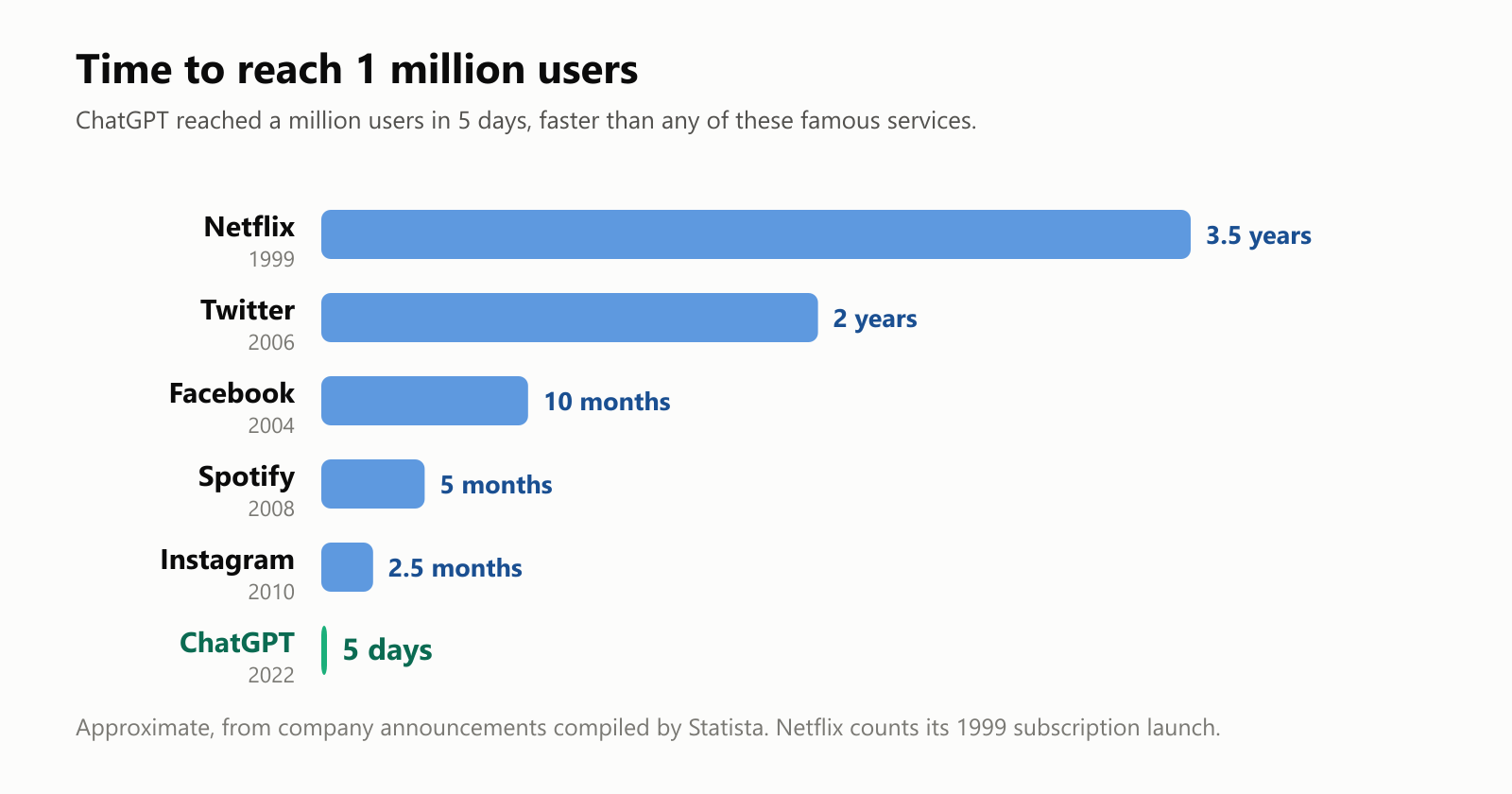
ChatGPT passed 1 million users in five days. Within about two months, analysts estimated it had 100 million monthly users, which made it the fastest-growing consumer app on record at the time. It has kept growing since:
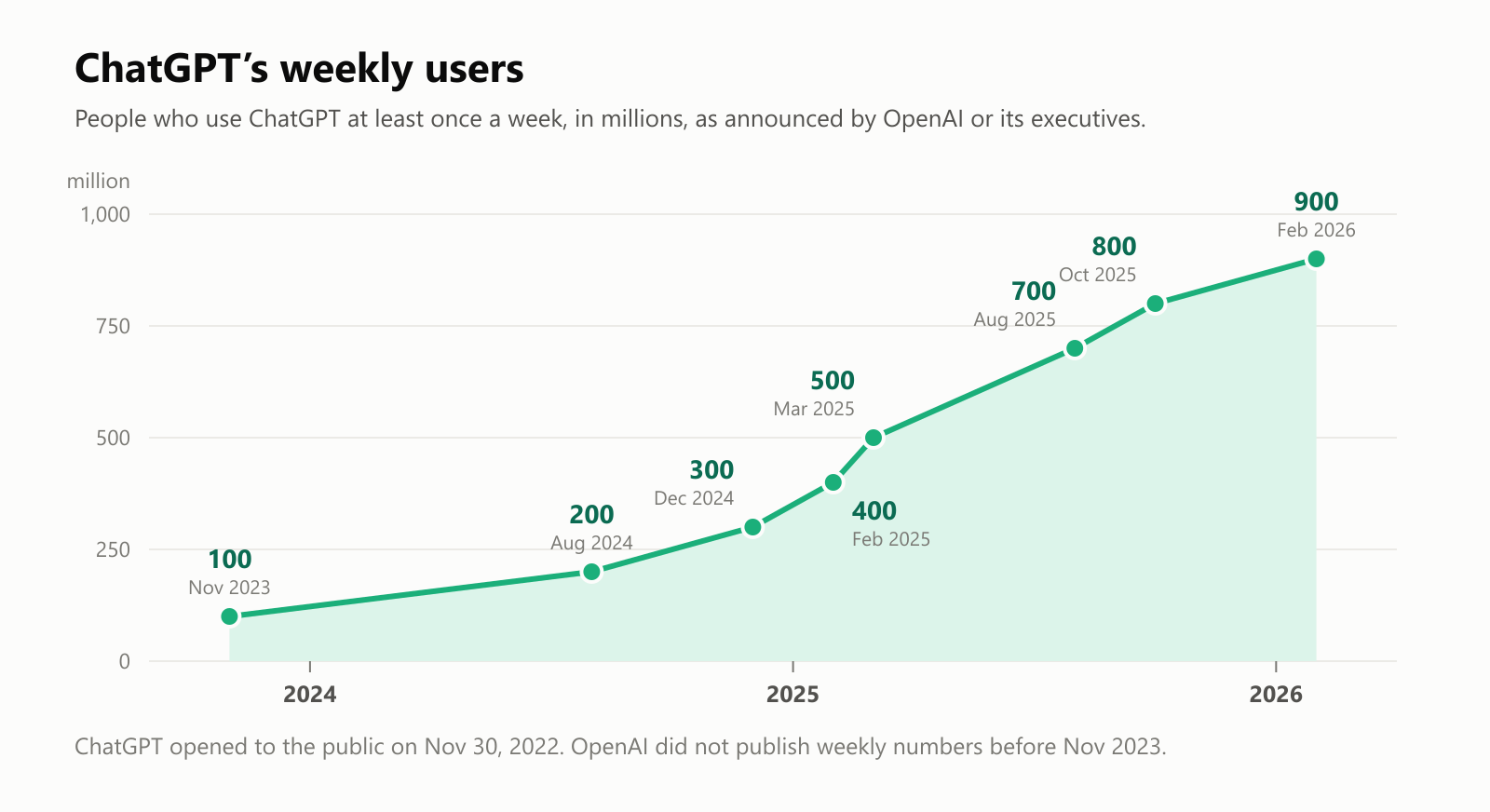
By February 2026, OpenAI said about 900 million people used ChatGPT every week, and more than 50 million paid for a subscription. Few products in history have spread this fast.
A nonprofit with a company inside
OpenAI's structure is unusual, and it has changed twice.
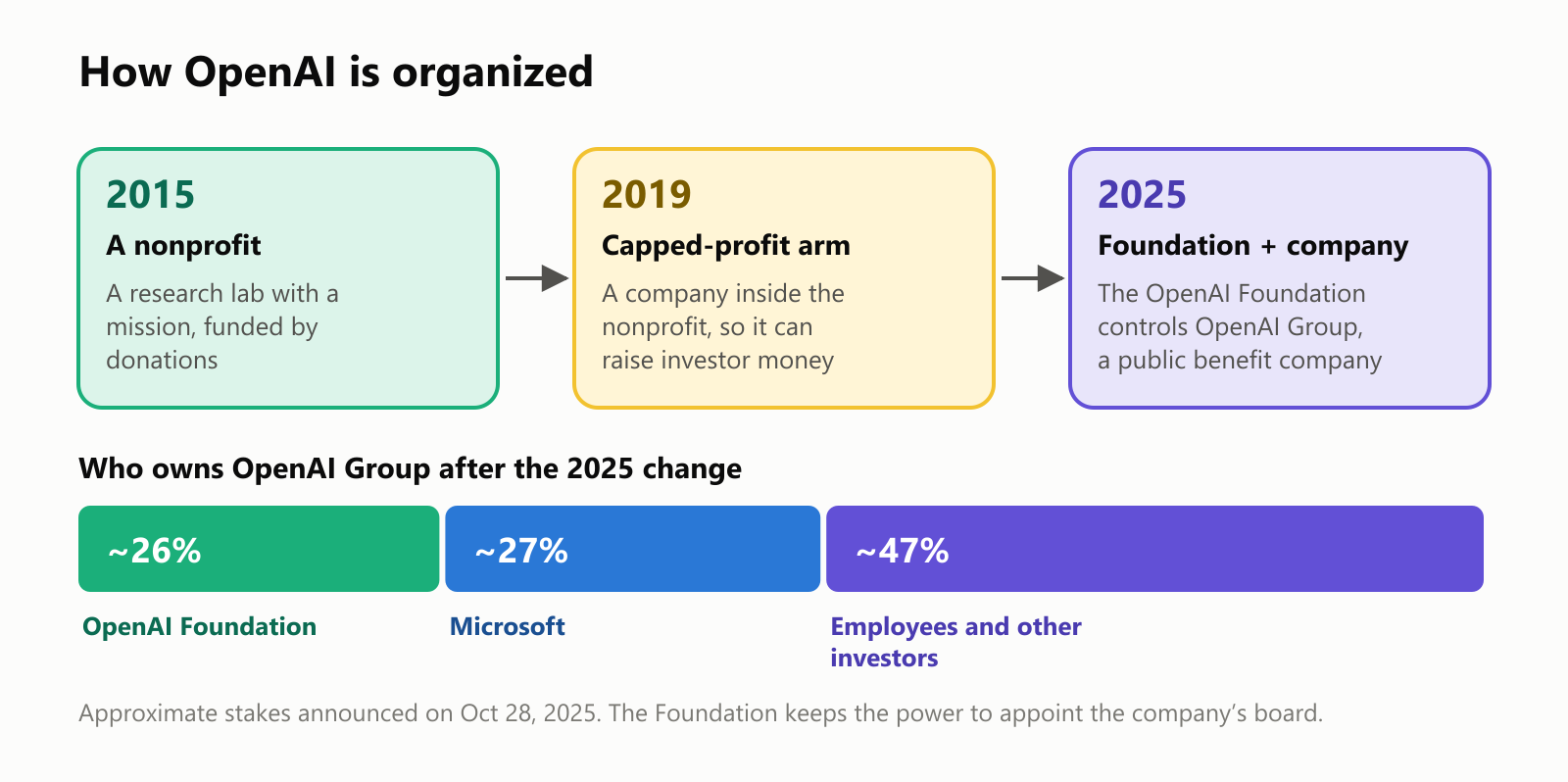
- 2015: a nonprofit. OpenAI started as a research lab funded by donations. Its backers pledged $1 billion, though far less actually arrived in the early years.
- 2019: a "capped-profit" company. Training big AI models turned out to need enormous amounts of computing power, and donations weren't enough. OpenAI created a for-profit company inside the nonprofit, where investors' returns were limited (capped). That same year Microsoft invested $1 billion, and it added about $10 billion more in 2023. Microsoft's cloud computers train and run many of OpenAI's models.
- 2025: a foundation and a company. In October 2025, OpenAI reorganized again. The nonprofit became the OpenAI Foundation, and the business became OpenAI Group PBC, a public benefit corporation: a company that must weigh its mission alongside profits. The Foundation controls the company's board and owns about a quarter of it, and Microsoft owns about 27%.
Elon Musk sued OpenAI, arguing it had abandoned its nonprofit promises. In May 2026, a jury found that he had waited too long to bring his main claims, and the judge dismissed the case.
What investors think OpenAI is worth
As ChatGPT spread, investors poured in money. OpenAI is not on the stock market, so its value is set each time it raises money or lets employees sell shares.
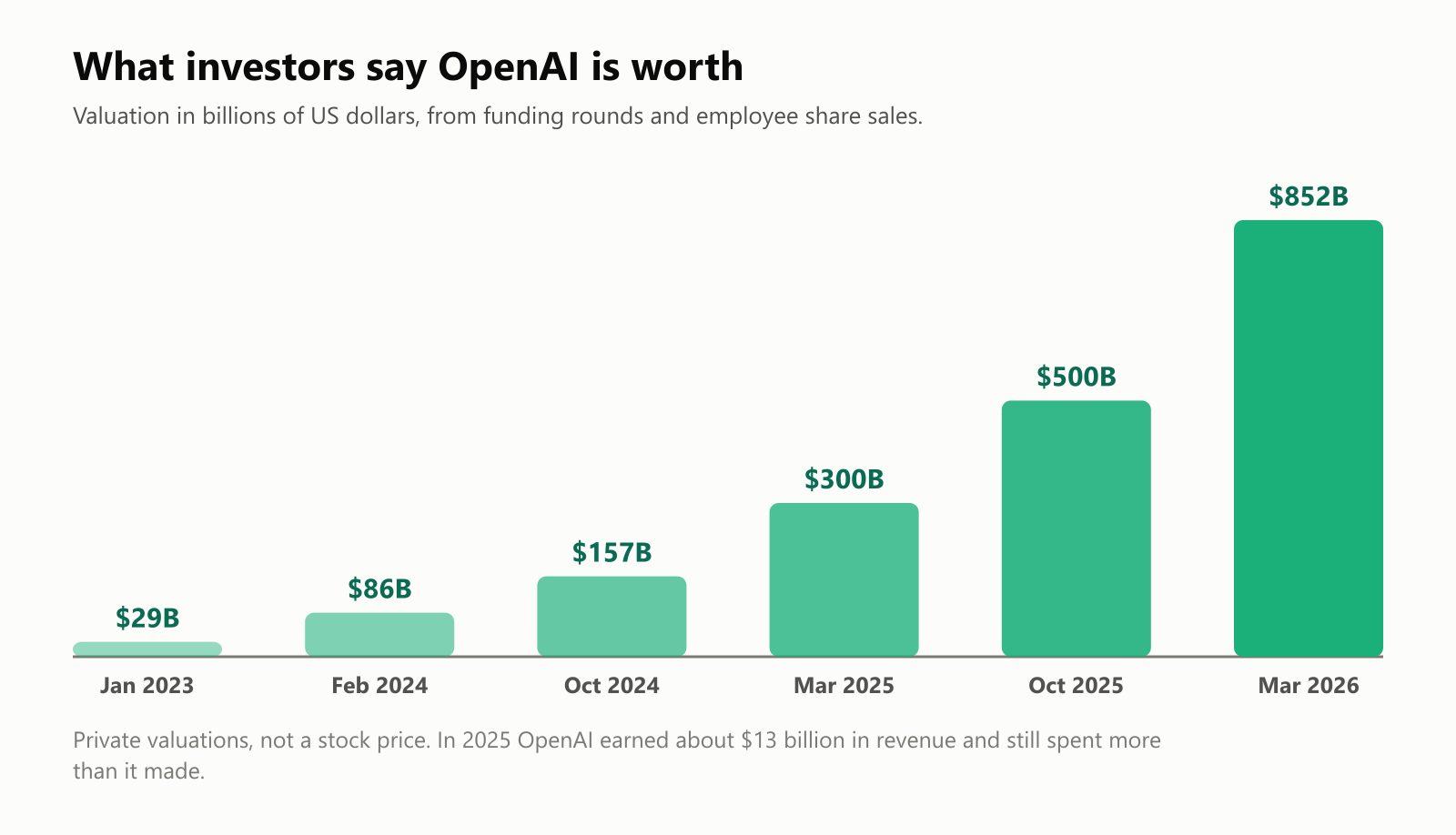
In March 2026, OpenAI raised $122 billion at a value of $852 billion, the largest private funding round in Silicon Valley history. It earned about $13 billion in revenue in 2025, but it spends even more, mostly on the computer chips and data centers that train and run its models. In June 2026, OpenAI confirmed it had filed private paperwork with US regulators to sell shares to the public one day, though it said it hadn't decided when.
The five days OpenAI fired its CEO
OpenAI's most famous drama happened in November 2023, a year after ChatGPT launched.
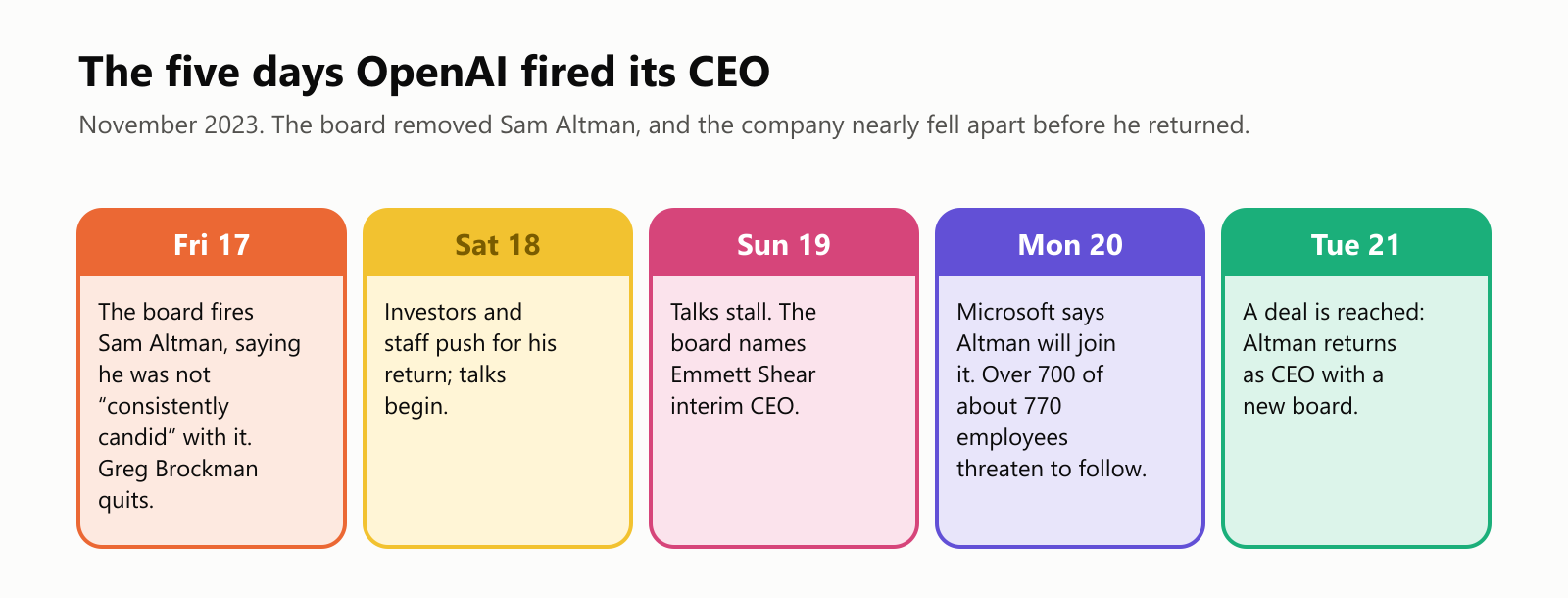
On a Friday afternoon, OpenAI's nonprofit board suddenly fired Sam Altman, saying he had not been "consistently candid" with it. Within days, almost the entire staff signed a letter threatening to quit and follow him to Microsoft. By Tuesday night, Altman was back, and most of the board members who had fired him were gone.
The episode showed how much power the nonprofit board held on paper, and how hard it was to use that power once billions of dollars and hundreds of millions of users depended on the company. It is one of the reasons OpenAI later reorganized.
Why people argue about OpenAI
OpenAI's tools are useful to many people, but the company is also at the center of serious debates:
- Mistakes that sound confident. ChatGPT can state wrong things fluently, a problem called hallucination. Newer models make fewer mistakes, but you should still check facts that matter.
- Copyright. Its models learned from huge amounts of text and images written by other people. Authors, artists and news organizations, including The New York Times, have sued, arguing this was done without permission or payment.
- Safety. Several well-known researchers have left OpenAI saying it was moving too fast. Families have sued, saying ChatGPT harmed vulnerable users, and OpenAI has added more safety features, especially for teens.
- Openness. A company named "Open" AI kept its biggest models secret for years. The 2025 open models were partly an answer to that criticism.
- Money and power. It costs enormous sums to build AI data centers. OpenAI's plans, including a project called Stargate announced in 2025, involve hundreds of billions of dollars and huge amounts of electricity. In 2026 it also began showing ads in ChatGPT's free version in the US.
OpenAI also has strong competitors, including Google (Gemini), Anthropic (Claude), Meta, xAI and DeepSeek, which keeps the race moving quickly.
A short history
Try it yourself
- Use ChatGPT. Go to chatgpt.com in any web browser or install the ChatGPT app on your phone. You can try it for free.
- Ask good questions. Give context, say who the answer is for and ask it to explain its steps. Our guide to prompt engineering has more tips.
- Check what matters. For health, money, legal or school questions, check important facts with reliable sources.
- Protect your privacy. Don't paste passwords, ID numbers or other people's private information into any chatbot.
Common questions
Is OpenAI the same as ChatGPT? No. OpenAI is the company. ChatGPT is its most famous product.
Is ChatGPT free? Yes, there is a free version. Paid plans add more capable models and higher limits.
Does Microsoft own OpenAI? No. Microsoft is a big investor and partner and owns about 27% of OpenAI Group, but the OpenAI Foundation controls the company.
Does ChatGPT know everything? No. It learned patterns from text up to a certain date, and it can search the web for newer information, but it can still be wrong. Treat it as a smart helper, not an all-knowing oracle.
Is OpenAI's AI open source? Mostly not. ChatGPT's models are private. OpenAI has released some open models, such as Whisper, GPT-2 and gpt-oss, that anyone can download.
Glossary
- AGI (artificial general intelligence): an AI that could do most work as well as people. OpenAI's mission is built around it.
- API: a way for other programs to use OpenAI's models over the internet, usually for a fee.
- GPT: Generative Pre-trained Transformer, OpenAI's family of language models.
- Hallucination: when an AI confidently says something false.
- Parameters: the adjustable numbers inside a model that are tuned during training.
- Pre-training: the first stage of training, where a model learns from a huge amount of text.
- Reasoning model: a model that works through a problem step by step before answering.
- RLHF: reinforcement learning from human feedback, where people's ratings teach a model which answers are better.
- Token: a piece of text, often a word or part of a word, that a model reads and writes.
- Tokenizer: the program that splits text into tokens and turns them into numbers.
Wrapping up
OpenAI began in 2015 as a small nonprofit lab with a big goal, building AI that benefits everyone. A decade later it is one of the most valuable companies in the world, and its ChatGPT app is used by roughly one in nine people on Earth every week.
Underneath, its technology rests on a simple idea, predicting the next piece of text, scaled up to an enormous size and polished with human feedback. Knowing that helps you use it well: enjoy how much it can help with, and keep your own judgment switched on.
Read next
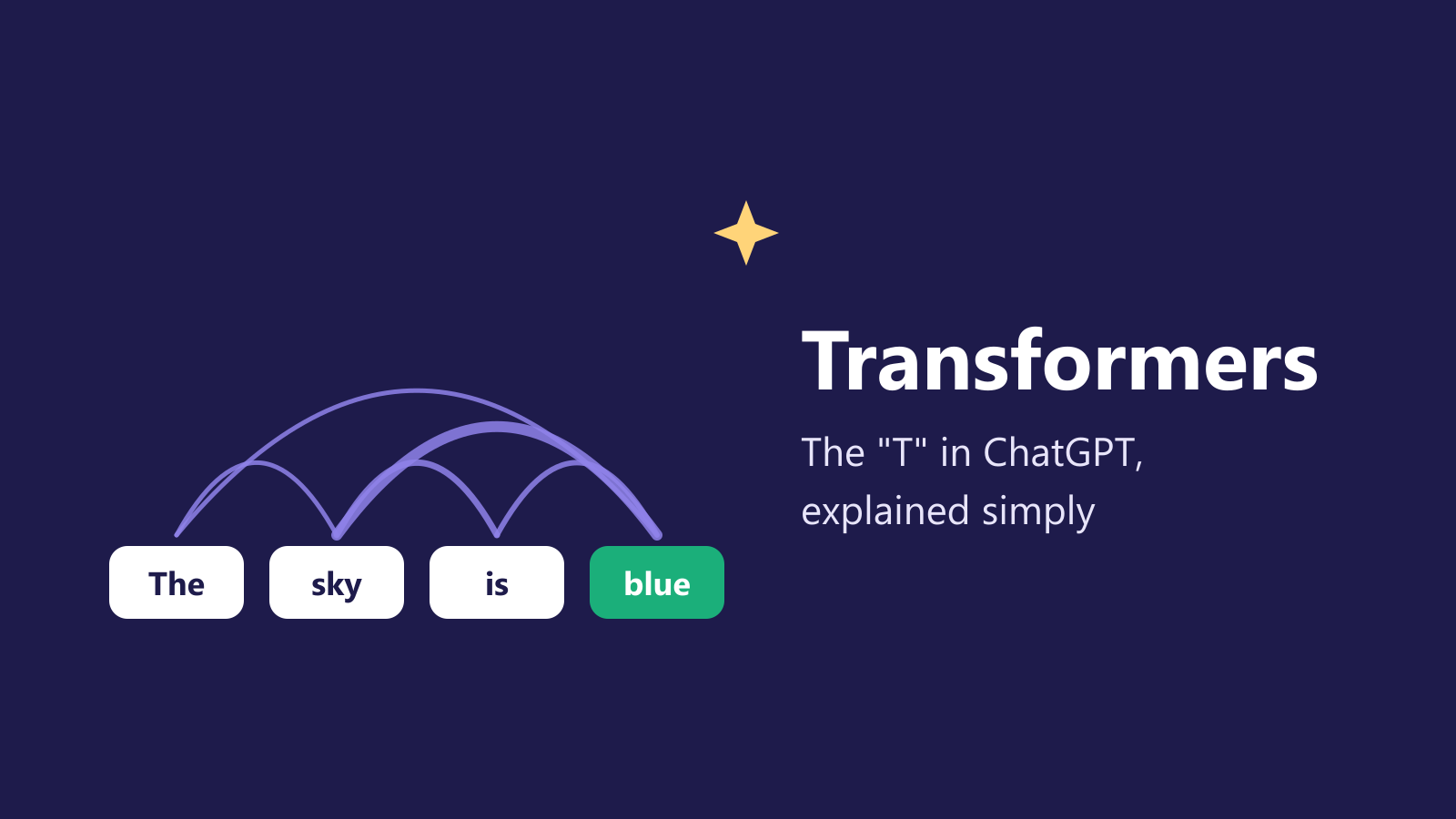
What Is a Transformer in AI? The Idea Behind ChatGPT, Explained Simply
A friendly, jargon-free guide to transformers, the AI design behind ChatGPT, Claude and Gemini. Learn how "attention" lets AI understand words in context, what happens inside a transformer, and why it changed AI so quickly.
 nbkhope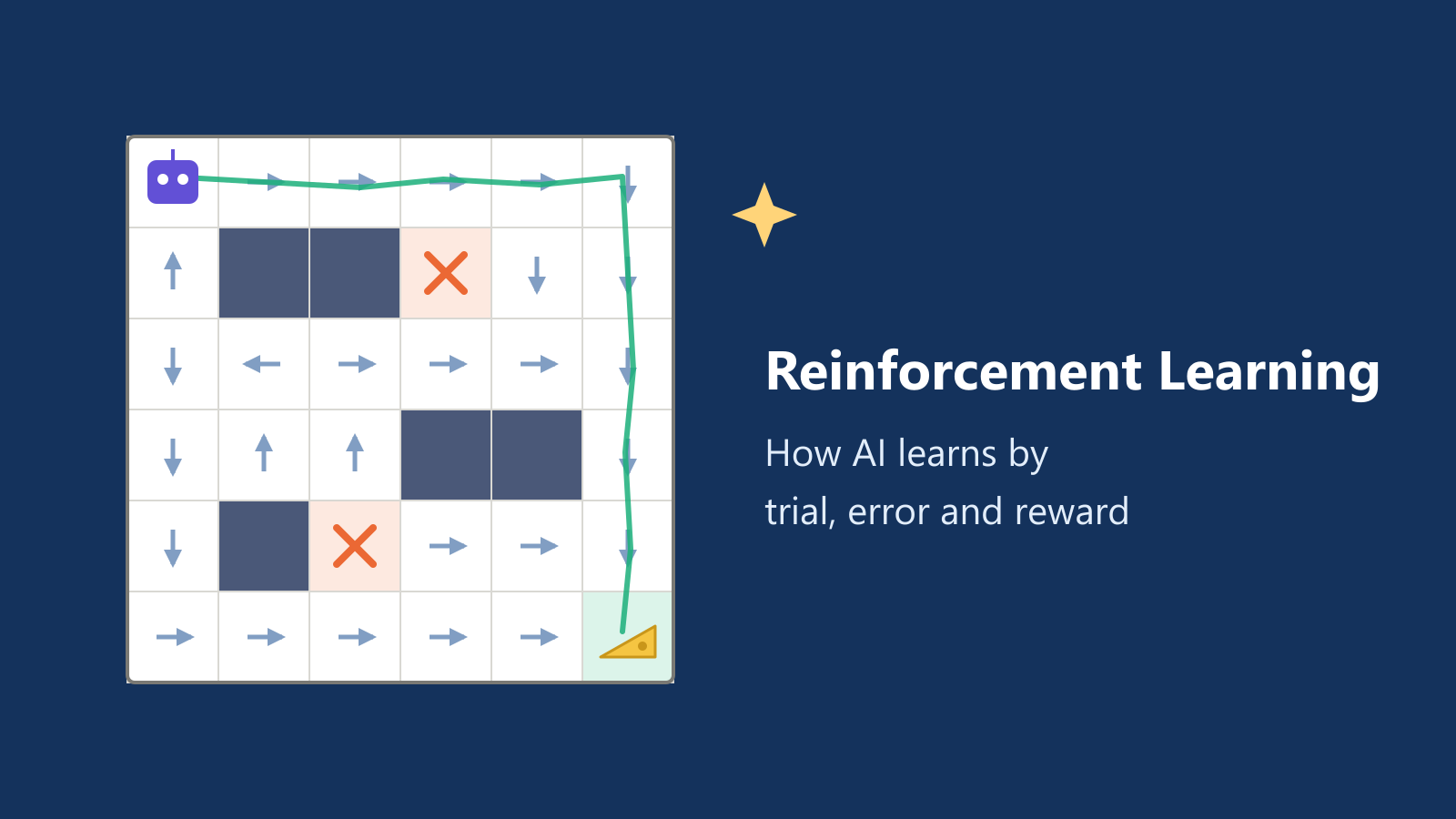
What Is Reinforcement Learning? How AI Learns by Trial, Error and Reward
A friendly, jargon-free introduction to reinforcement learning, how AI learns by trial, error and reward, like training a dog with treats. Watch a real robot learn a maze, see why exploring matters, and learn how it shapes chatbots.
nbkhope
What Is Graph Engineering? How Today's AI Teams Up to Get Real Work Done
A friendly, jargon-free guide to graph engineering, the 2026 idea of building AI as a map of connected steps instead of one big loop. See how today's AI agents work, why small mistakes add up, and how checkers, branches and teamwork fix it.
nbkhope
Comments
Be kind and specific. Comments with links from new accounts appear after a moderator reviews them.