
How to Verify a Suspicious Image or Video
A striking image or video can be real, generated, edited, or simply mislabeled. Follow a practical source-checking workflow before sharing it.

On this page
How to Verify a Suspicious Image or Video
A post claims that a photo shows a flooded subway station today. The water looks convincing. So do the comments. Is the picture generated by AI, an old photo from another city, or a real photo of today's event? Those are different questions, and a close look at the pixels cannot answer them all.
Use this fictional post as a small investigation you can repeat with any public image or clip. Your aim is to establish who published it, where and when it first appeared, and what evidence supports the caption. You may finish with “unverified.” That is a useful result when the evidence is thin.
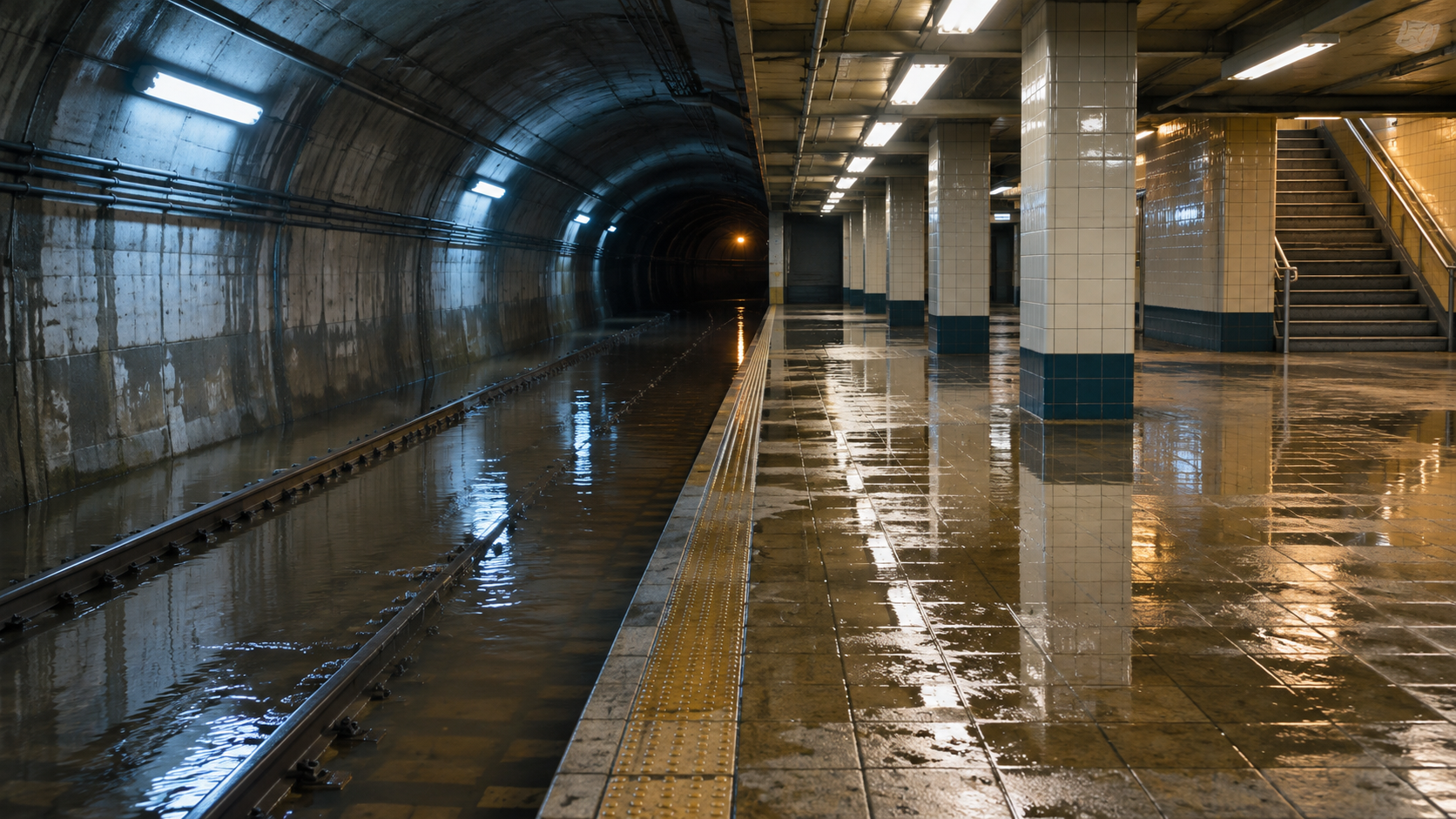
About this picture: It was generated for this article. No subway station flooded for the purpose of this example, and the image has no real event date or location. Its realistic appearance alone cannot verify the imagined post's claim. Keep that known origin in mind as you work through the checks below.
Start with the claim, not the image
Write the claim in one sentence: “This shows Station X flooding on November 17, 2026.” Save the post URL and note the account, publication time, caption, and whether it names a photographer or source. A repost is a lead, not an original source.
For practice, imagine the picture above appears with two different captions:
Post A: “Station X flooded this morning.”
Post B: “Archive photo of a subway flood in another city, 2022.”
These are invented captions, not discovered posts. They cannot both describe this generated picture accurately. The exercise is to look for an attributable original and independent evidence rather than choose the caption that sounds more plausible.
Check the publisher's own site or account. Does it have the full image, a longer video, a location, and a description of how it obtained the media? Search for independent local reporting or an official update about the event. A real flood elsewhere does not establish that this frame shows this station.
| Question | Useful evidence | What it cannot settle alone |
|---|---|---|
| Who posted it first? | Earliest traceable upload, photographer, agency, or original page | Whether their caption is accurate |
| When and where was it made? | Original context, recognizable landmarks, corroborating reports | Whether every part of the frame is unedited |
| Has it appeared before? | Reverse-image results and older copies | Whether a new event also happened |
| Is there provenance data? | A validated Content Credential and its signer | Whether the scene itself is true |
Search for earlier copies
Run a reverse-image search using the full image, then crop to a distinctive feature if the first search is noisy. Search the caption's key nouns in the local language and English. Open promising results and compare the actual pages and dates, not just search snippets. FactCheck.org's misinformation guide recommends reverse-image searching to find earlier appearances and their context.
For a video, take several clear frames from different moments and search those as images. Look for a longer original clip, a station sign, a storefront, or a weather detail. An old clip with a new caption is a common failure of context; a single matching frame can point you toward the original, but inspect the whole source before drawing a conclusion.
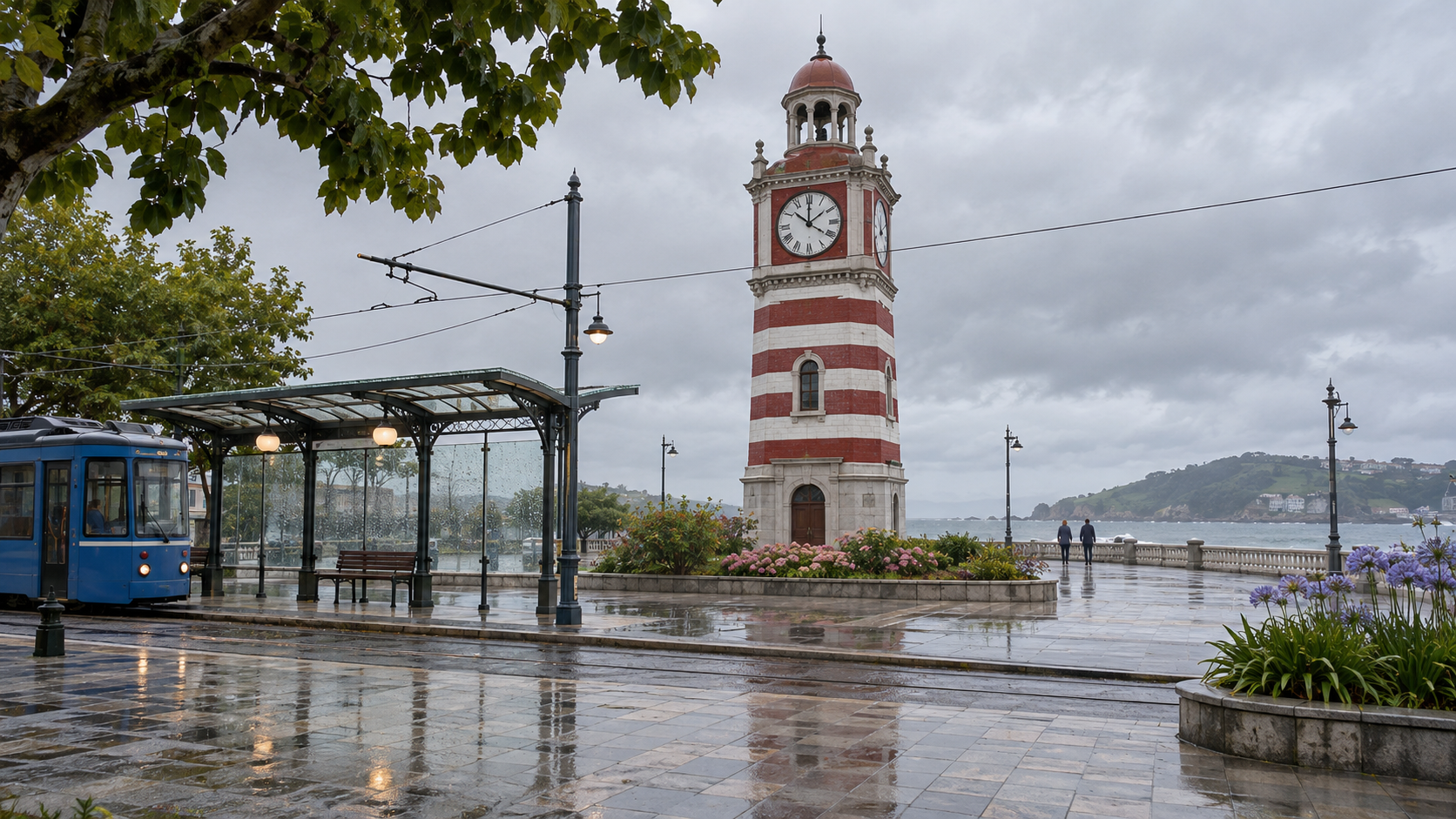
This second picture is another generated teaching image, not real video footage. If it were a frame from a circulating clip, you could search the distinctive clock tower, tram, and shoreline together, then compare any matching page with the full clip. A match to a building alone would not prove when the video was recorded.
In a real investigation, suppose you find the same subway image in a 2022 article about another city. You can then say the 2026 caption is unsupported by that image. This is a hypothetical outcome, not a reverse-search result for our generated example. You do not need to prove whether a picture was AI-generated to reject a false date and place.
Treat visual clues as leads
Impossible geometry, inconsistent text, odd shadows, or a jump in a video can justify a closer look. They are not a dependable verdict. Editing, compression, camera motion, and ordinary mistakes can create strange details; generated media can also look ordinary. An automated “AI detector” score is another lead, not proof of origin. Ask what independent evidence would change your conclusion.
Metadata such as a camera timestamp may help when you have a trustworthy original file, but social platforms and exports can remove it. A timestamp can also reflect a device setting rather than the event. Absence of metadata does not mean an image is fake.
Check provenance when available
If the file or its publisher offers Content Credentials, inspect them with a compatible verifier such as Content Credentials Verify. Note whether validation succeeds, who signed the record, and what creation or editing steps it lists. Credentials are evidence about a file's recorded history, not a truth certificate. The C2PA explainer says provenance alone cannot establish whether content is factual and that a missing credential is not grounds to dismiss a file.
Read What Are Content Credentials? for a create–edit–export example and the limits of signed provenance.
Record a decision you can defend
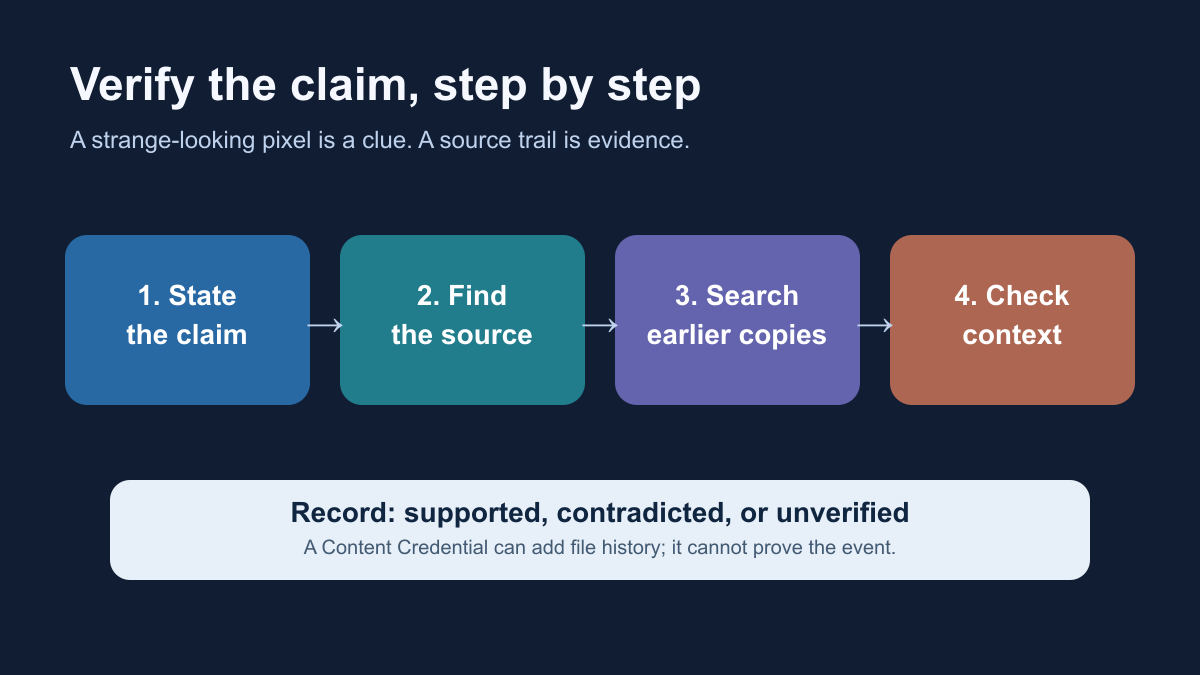
Finish with a short evidence note:
- Claim: What exactly does the post assert?
- Source: What is the earliest credible source you found?
- Context: Do location, date, and independent reporting agree?
- File history: Was a credential present and valid? What did it actually say?
- Conclusion: Supported, contradicted, or still unverified—and why?
For the fictional subway post, an older matching publication would contradict the claimed date and place. If no earlier source or corroboration turns up, label the claim unverified and avoid sharing it as fact. Verification is a chain of evidence, not a game of spotting six fingers.
Sources and further reading
Read next

AI Agents for Weekly Work Reports: From Scattered Updates to a Trustworthy Draft
Build a weekly report from Slack or Teams, GitHub, Jira and documents without inventing progress. Follow a source-linked agent workflow and copy a ready-to-use prompt.
 nbkhope

How to Debug with AI Agents: From Mysterious Bug to Verified Fix
Give an AI agent the right repository, browser and operational context. Trace a bug from the UI through code, logs and tests to a reviewable fix.
nbkhope
On-Device AI vs. Cloud AI: What Changes for You?
Where does an AI task actually run—on your device or on a server? Use an offline travel-photo example and a decision map to weigh privacy, capability, network needs, and battery.
nbkhope
Comments
Be kind and specific. Comments with links from new accounts appear after a moderator reviews them.